DIN 1.2379 - AISI D2 - JIS SKD11 Cold Work Tool Steel Round Bar & Plate – High-Chromium Alloy Steel for Dies and Industrial Tooling
DIN 1.2379 is a high-carbon, high-chromium cold work tool steel widely used in manufacturing dies, punches, cutting tools, and wear-resistant industrial c…
Seller: Hubei Keyspark Special Steel Co., Ltd.
Price: 1600.00 USD
China
DIN 1.2379 - AISI D2 - JIS SKD11 Cold Work Tool Steel Round Bar & Plate – High-Chromium Alloy Steel for Dies and Industrial Tooling
$1,600.00
PER TON
Minimum order quantity: 1
Quantity
Secure packaging
§ BULK ORDER
Competitive pricing · Dedicated account manager · Flexible delivery
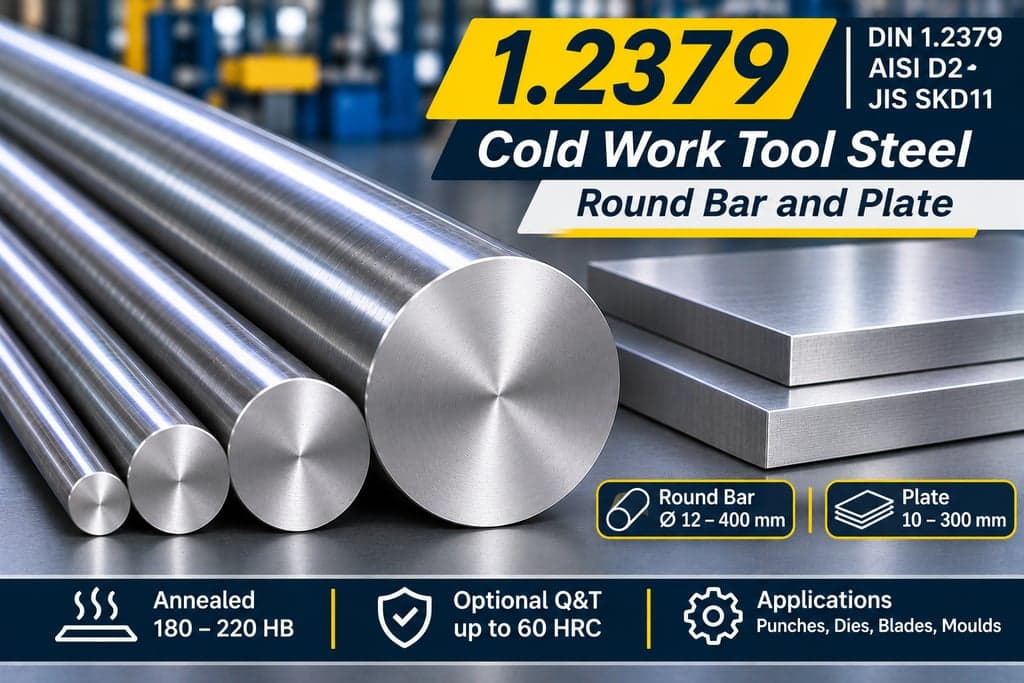
DIN 1.2379 is a high-carbon, high-chromium cold work tool steel widely used in manufacturing dies, punches, cutting tools, and wear-resistant industrial components. Also commonly referenced as AISI D2 and JIS SKD11, this material is valued for its high hardness potential, wear resistance, and dimensional stability following appropriate heat treatment. Available in peeled round bars with diameters from 12 mm to 400 mm and plates with thicknesses from 10 mm to 300 mm, DIN 1.2379 tool steel is supplied in an annealed condition with a stated hardness of 180–220 HB. Optional quenched and tempered (Q&T) supply is available with hardness up to 60 HRC. Its combination of alloy composition and heat-treatment capability makes it suitable for demanding cold work applications involving repeated cutting, forming, and abrasive contact.
Key Features
Material Grades: DIN 1.2379 / AISI D2 / JIS SKD11 Steel Type: High-carbon, high-chromium cold work tool steel Product Forms: Peeled round bars and plates Round Bar Diameter: 12–400 mm Plate Thickness: 10–300 mm Annealed Hardness: 180–220 HB Optional Heat Treatment: Quenched and tempered (Q&T) Q&T Hardness: Up to 60 HRC Material Characteristics: High hardness potential, wear resistance, and dimensional stability Applications: Stamping dies, blanking dies, punches, cutting tools, and industrial tooling
Technical Specifications
DIN Material Number: 1.2379 AISI Grade: D2 JIS Grade: SKD11 Material Category: Cold work tool steel Alloy System: High-carbon, high-chromium alloy steel Round Bar Surface: Peeled Round Bar Diameter Range: 12–400 mm Plate Thickness Range: 10–300 mm Delivery Condition: Annealed Annealed Hardness: 180–220 HB Optional Delivery Condition: Quenched and tempered Q&T Hardness: Up to 60 HRC
Applications
DIN 1.2379 cold work tool steel is used in manufacturing environments where tooling must withstand repeated cutting, forming, and abrasive wear.
Typical applications include
Stamping Dies: Tooling for sheet metal stamping and press operations Blanking and Punching Dies: Precision dies, punches, and cutting components Industrial Cutting Blades: Shearing blades and industrial cutting tools Cold Forming Tools: Dies and tooling for metal forming processes Precision Tooling: Mould inserts, wear-resistant components, and industrial tooling Manufacturing Equipment: Selected components requiring high hardness and wear resistance
Benefits for B2B Buyers
Recognised DIN, AISI, and JIS grade references for international sourcing Available in round bar and plate formats Broad dimensional range for different machining requirements Annealed supply condition suitable for machining before final heat treatment Optional Q&T processing for higher-hardness applications Suitable for precision die manufacturing and demanding cold work operations
Ideal B2B Buyers
Cold work die manufacturers Metal stamping and blanking companies Punch and cutting tool manufacturers Industrial blade manufacturers Precision mould and tooling manufacturers CNC machining and engineering companies Tool steel distributors, stockists, importers, and exporters
Request a Wholesale Quote
Contact the supplier for current pricing, available round bar diameters, plate thicknesses, stock availability, minimum order quantity, delivery lead time, and shipping terms. For an accurate quotation, provide your required grade, product form, dimensions, quantity, delivery condition, and target hardness. Technical Procurement Note: Buyers should verify the applicable material standard and chemical composition for DIN 1.2379, AISI D2, and JIS SKD11 before treating them as interchangeable. Confirm steel cleanliness, carbide distribution, dimensional tolerances, straightness, plate thickness, heat-treatment procedure, hardness test method, and material test certificate availability. The stated maximum hardness of 60 HRC should be confirmed for the selected section size and intended application.